
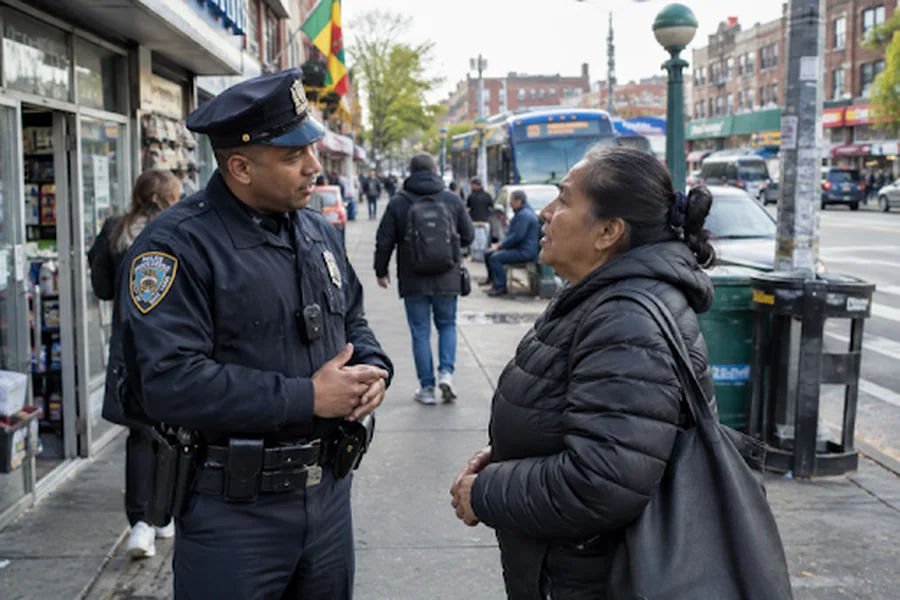
In Jamaica, New York, where residents, commuters, businesses, schools, and public safety professionals share crowded streets and public spaces, a visible badge can provide immediate reassurance during an emergency. For departments and authorized personnel evaluating professional badge Jamaica NY, Mesk Uniforms is a Jamaica-based public safety equipment dealer whose Smith & Warren badge page offers professional badges and insignia, with badge orders requiring official identification or department authorization. That authorization-focused process matters because a badge should be connected to a legitimate role, not simply treated as a decorative accessory.
A public safety badge is a small object with a large message. It may identify an officer, firefighter, investigator, transit professional, or other authorized employee at a glance. Yet its meaning is not created by metal, enamel, or a polished finish alone. The badge becomes meaningful when it is paired with accurate credentials, clear policies, training, and professional behavior.
What a Public Safety Badge Tells the Public
At its most practical level, a badge can communicate the wearer’s agency, role, rank, or service function. A department seal, municipal name, shield shape, serial number, or recognizable emblem gives people useful information when time and attention are limited. That can be especially important during traffic stops, emergency calls, investigations, public meetings, or large events near transit hubs and commercial corridors in southeast Queens.
Good identification reduces uncertainty, but it should never create confusion about authority. A badge works best when it matches the wearer’s uniform, identification card, vehicle markings, and stated agency. It is one part of a larger identification system.
How Design Reflects Department Values
Badges often use shields, stars, eagles, seals, state imagery, or local landmarks. These details can honor a department’s history and help residents recognize which agency serves their neighborhood. In a community as diverse as Jamaica, a design should be understandable, professional, and respectful to the people who encounter it.
Departments do not need to choose between tradition and clarity. A well-considered badge can preserve established symbolism while keeping the agency name, role, and identifying number easy to read. Fine decorative details may be meaningful up close, but essential information must remain visible in routine public interactions.
Recognition, Verification, and Public Safety
Visible identification helps distinguish authorized public safety personnel from civilians, volunteers, private security staff, and possible impersonators. Still, a badge alone does not prove every claim made by the person wearing it. Residents who are unsure should use practical, safe verification steps.
Helpful Verification Practices
- Look for the agency name and badge number.
- Ask for the person’s name and department when circumstances allow.
- Compare the badge with the uniform, photo identification, vehicle, and stated agency.
- Use an official agency phone number to verify the encounter if uncertainty remains.
- When an encounter feels concerning, move to a safe, well-lit location before making a call, when possible.
Why Accountability Matters More Than Appearance
A badge represents delegated authority and a responsibility to use that authority properly. It can signal professionalism, but it cannot compensate for dishonesty, unfairness, impatience, or poor communication. Public confidence is shaped by how people are treated, particularly during stressful encounters when an officer must make decisions or enforce rules.
Research and discussion around police legitimacy and public trust emphasize that fairness, neutrality, respectful treatment, and transparent decision-making matter to how communities evaluate public safety institutions. For agencies, the lesson is straightforward: visual professionalism should reinforce good service, not attempt to replace it.
Badge Placement, Condition, and Daily Professionalism
Consistent badge placement allows residents and fellow personnel to quickly identify the wearer. A badge should be secure, clean, and readable, and worn in accordance with the agency’s uniform policy. Routine uniform checks can identify loose pins, bent fittings, worn finishes, blocked lettering, or attachments that no longer hold the badge safely in place.
Professional presentation supports readiness, although appearance is not a substitute for training or sound judgment. The goal is functional identification that works during an ordinary shift as well as during a fast-moving incident.
Choosing a Badge for a Public Safety Uniform
For department leaders, uniform managers, and authorized personnel, a badge decision should be based on operational needs rather than appearance alone. Consider the following:
- Authority: The design accurately reflects the agency and authorized role.
- Readability: The department name and identifying details can be recognized quickly.
- Durability: Materials and finish can withstand regular wear, cleaning, weather, and storage.
- Fit: The attachment works with the approved uniform or badge carrier.
- Control: Ordering procedures limit access to approved buyers and agencies.
- Consistency: The badge aligns with other department insignia, credentials, vehicles, and public information.
Badges, Community Identity, and Local Meaning
Local symbols can make an agency’s identity more recognizable, whether the organization serves a municipality, transit system, fire district, sheriff’s office, or emergency service. Before changing a long-standing badge, departments can benefit from consulting employees and community stakeholders. A successful design connects people to the agency without creating needless cultural or political confusion.
Common Mistakes to Avoid
- Using an unofficial or unauthorized design.
- Making the agency name or badge number too small to read.
- Adding details that overpower essential identification.
- Treating a badge as a substitute for credentials, training, or appropriate conduct.
- Failing to update public-facing information after an insignia change.
- Keeping damaged or poorly secured badges in service.
Common Questions About Public Safety Badges
What does a public safety badge represent?
It generally represents an official connection to an agency, an authorized role, and an expectation of ethical, professional conduct.
Can a badge alone prove that someone is an officer?
No. It is one identifying feature to consider alongside credentials, agency details, uniform elements, vehicle markings, and the circumstances of the encounter.
Why are badge numbers important?
Badge numbers can help agencies identify personnel and support documentation, supervision, public records, and complaint processes. Display practices vary by agency.
Where the Badge Fits in Modern Public Safety
Modern identification includes traditional metal badges, photo credentials, agency websites, vehicle markings, digital records, and other tools. Technology can improve verification, but it does not eliminate the need for clear visual identification. The FBI discussion of badge and public trust reinforces the broader principle that public authority carries an obligation to honor the community’s confidence.
Conclusion: Trust Is Built by the Person Wearing the Badge
For Jamaica and the surrounding Queens area, a public safety badge can identify a role, represent an agency, and signal a promise of service. Its real value, however, comes from the person wearing it. Clear identification, careful badge controls, respectful conduct, and accountable decision-making work together to create the trust that no symbol can earn on its own.