
Atlanta businesses can close security gaps by developing a coordinated plan that includes intrusion detection, video surveillance, access control, fire protection, monitoring, and clear employee procedures. Instead of treating each device as a separate purchase, business owners should consider how every layer contributes to visibility, deterrence, controlled entry, and response.
For companies evaluating commercial security systems Atlanta, GA, American Guardian Security Systems, Inc. offers a local path from site assessment through installation and continuing support. A layered approach helps businesses secure entrances, inventory, staff areas, exteriors, and sensitive rooms without relying on a single solution. One camera records incidents but can’t control access; an alarm detects unauthorized activity but doesn’t show what happened. Access control restricts doors but doesn’t replace fire detection or emergency plans. Combining these tools gives owners a complete operational picture. American Guardian, a family-owned security provider in Peachtree Corners since 1985, offers access control, CCTV, security, fire, and smart systems, including non-proprietary options for future flexibility.
Why Layered Security Matters for Commercial Properties
Every business has different pressure points. A retail store may need stronger coverage around registers, merchandise, and closing procedures. A warehouse may need attention at loading docks, perimeter areas, employee entrances, and in high-value inventory areas. An office may prioritize visitor management, restricted records, and after-hours access.
Federal physical-security guidance recognizes that organizations operate in varied environments and face different types of risks. Businesses can use preventive and protective strategies as part of a broader process to assess their facilities, train personnel, and prepare for incidents. Technology is valuable, but it should support an intentional plan rather than substitute for one.
What Commercial Security Services Can Work Together?
Commercial Alarm Monitoring
Commercial alarm systems can help identify unauthorized entry or activity when a business is closed or when areas are not in use. During planning, owners should ask which zones need protection, who receives notifications, and what internal procedures should be followed in the event of an alarm. Monitoring arrangements should be reviewed carefully so decision-makers understand how signals are handled.
CCTV and Video Surveillance
Video surveillance can improve visibility at entrances, exits, hallways, parking areas, loading zones, cash-handling locations, and equipment rooms. American Guardian lists wired and wireless commercial camera options, including bullet, dome, panoramic, and audio-enabled systems. Proper camera placement should account for lighting, coverage angles, storage needs, remote viewing permissions, and privacy considerations.
Access Control
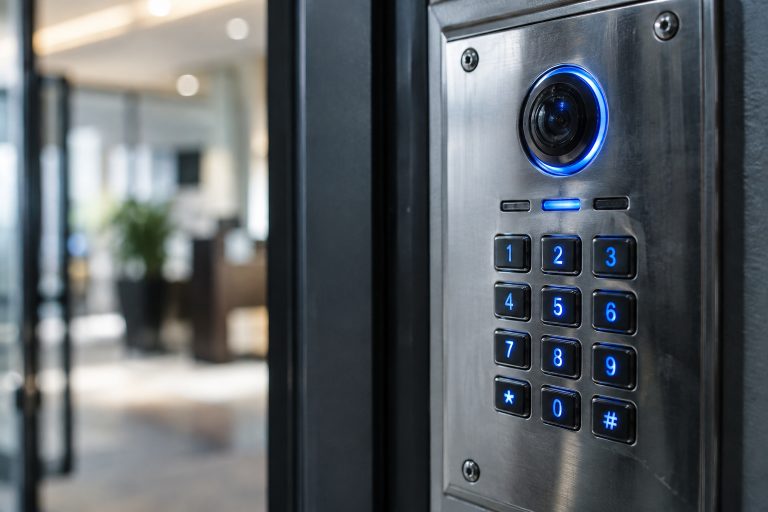
Access control manages entry before someone reaches a sensitive area. Depending on the site, a system may use keypads, key cards, biometric tools, or Wi-Fi-enabled controls. Permission levels can be assigned to employee roles, contractors, visitors, schedules, and restricted spaces. A small office may need only one controlled door, while a larger facility may require access groups across multiple zones.
Commercial Fire Systems
Security planning should also account for life safety. American Guardian provides commercial fire system installation, monitoring, inspection, and service. Fire alarm equipment and inspection requirements must align with applicable codes and the requirements of the local authority having jurisdiction. Monitoring can support notification and escalation, but businesses still need to maintain equipment, have evacuation plans in place, provide training, and conduct regular compliance reviews.
How Does American Guardian Build a Practical Security Plan?
- Review the property. Identify doors, windows, parking areas, public-facing spaces, loading zones, storage rooms, and vulnerable exterior points.
- Define priorities. Consider unauthorized access, theft, vandalism, inventory loss, workplace safety, fire concerns, and interruptions to normal operations.
- Match equipment to the risk. Place cameras, sensors, alarms, access devices, and fire equipment where each tool has a clear job.
- Plan alerts and authority. Establish who can arm or disarm the system, review video, manage credentials, and respond to alerts.
- Install, test, and train. Confirm coverage, connectivity, permissions, device operation, and employee understanding before relying on the system.
- Review over time. Update the plan after a remodel, staff turnover, expansion, new inventory, or a change in operating hours.
Security Planning for Different Atlanta Business Types
- Office buildings: Controlled entrances, visitor access, employee permissions, cameras, and after-hours alarms may be central concerns.
- Retail stores: Owners may focus on front entrances, registers, merchandise areas, stockrooms, closing routines, and intrusion detection monitoring.
- Warehouses: Exterior cameras, loading-dock visibility, employee-door access control, interior inventory coverage, and alarm zones can work together.
- Professional practices: Restricted records, staff-only areas, visitor flow, and tailored alarm zones may shape the design.
- Multi-tenant properties: Shared entrances, common spaces, service access, and distinct tenant permissions often require careful system organization.
What Should a Business Ask Before Requesting a Quote?
- Which doors, rooms, assets, and exterior areas need protection?
- Which combination of access control, cameras, alarms, monitoring, and fire protection fits the property?
- Can existing wiring or equipment be reused, upgraded, or integrated?
- How will user permissions be added, removed, and reviewed?
- What happens after an alarm, camera, or fire system event occurs?
- What installation, inspection, maintenance, monitoring, training, and support costs are included?
- Will the system remain suitable if the business adds staff, locations, inventory, or restricted areas?
Why Local Service Can Matter
A local provider can be useful when a business needs site-specific planning, installation coordination, hands-on training, or follow-up service. Local service is not the only factor that matters, however. Businesses should also compare equipment compatibility, system ownership, contract terms, monitoring procedures, warranties, licensing, and long-term support.
Security is not only a technology decision. The resources available to small and medium businesses emphasize protecting people, customers, intellectual property, and sensitive data from both physical and cyber threats. For physical security, a strong plan combines dependable equipment with trained users, documented procedures, maintenance, and regular reassessment.
Getting Started With American Guardian
Businesses can begin by describing the property, primary concerns, current equipment, and future growth plans to American Guardian Security Systems, Inc. A commercial assessment or quote can help turn disconnected devices into a coordinated plan that addresses access, visibility, alarm activity, fire protection, and ongoing management. The goal is not simply to add more equipment. It is to create a security system that supports the way the business actually operates.