
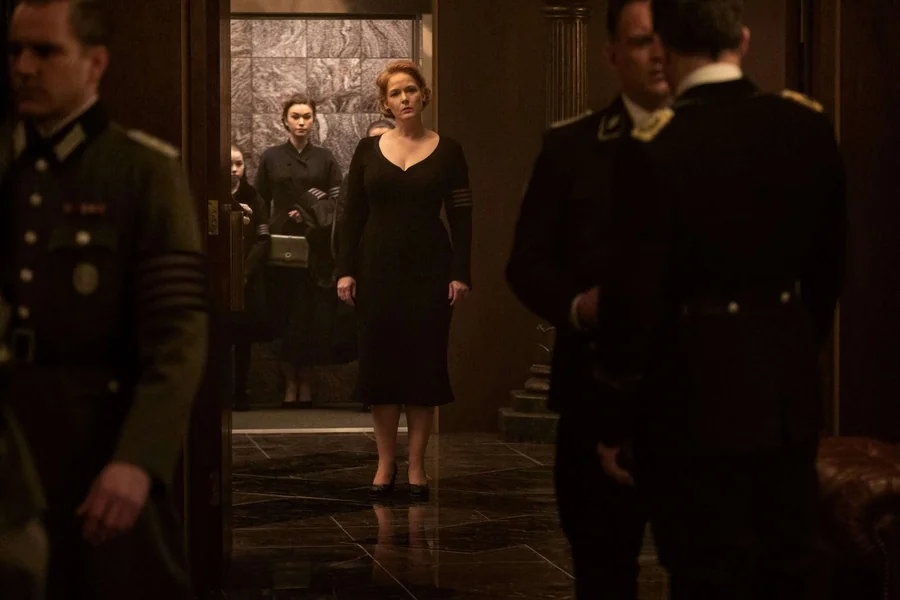
The Man in the High Castle is a television show, which has left the audience on the edge of their seats due to its alternate history and its more developed characters. The show was based on the novel by Philip K. Dick and speculates how the world would have been in a scenario where the Axis powers won the World War II and partitioned the United States into Nazi Germany and Imperial Japan territories. Further into the show, the show expands on the themes of resistance movements, parallel worlds, and power.
The Man in the High Castle has a resolution in the last season that left a lot to be desired by the fans. In this paper, we will deconstruct the Man in the High Castle ending explained and the meaning of the same to the characters, the alternate realities, and the series in general.
The Two Worlds: The Role of Alternate Realities
The Man in the High Castle is centred around the idea of alternate realities. In the series, characters find movies that depict a different side of the storey- a world in which the Allies had won the WWII and the Nazis had been defeated. Such movies ignite a motivation to change and some of the characters are on a trip to know how these alternate worlds live.
In the last season, it is evident these alternate realities are not a mere fantasy but a reality. The Man in the High Castle explanation of the ending reveals that the worlds are interrelated, and individuals of alternative realities meet each other. The series ends with a concept that there is no one, absolute reality but a multiverse of a possibility.
The nature of these alternate realities in the show is left open-ended and this has been a point of a lot of debate amongst the show-goers. Is it merely the hope of the characters in having a better world, or are these parallel worlds even in reach? The provided explanation of the ending implies that the boundaries between the realities are really thin, and the ability to alter the course of history is held in the hands of the people who can access the worlds.
The Fate of Juliana Crain
One of the key characters in The Man in the High Castle is Juliana Crain, whose character development is a discovery, a challenge, and the reality that she faces during the series. She is initiated as a member of the resistance and gets into the thick of the mystery of the alternate worlds.
During the last season, Juliana is faced with the prospect of going to a different reality. She is informed that her doings in the existing world can redefine history and can transform the future of the humankind. According to the Man in the High Castle ending clarified, Juliana does the final sacrifice as she decides to assist in the initiation of the events that will enable the establishment of a new world in which the Nazis would be beaten.
The ending revolves around her choice to struggle to bring better future. Juliana is depicted in the last scenes entering into a new reality without being able to go back to the world where the Nazis and the Japanese Empire are the powers. This is a victory and a tragic end of her storey because she has to forget those people she cares about in favour of the greater good. In the conclusion, Juliana is a beacon of hope and opposition even when everything is against her.
John Smith’s Redemption Arc
The Man in the High Castle also features a very complicated character arc of John Smith, the high-ranking Nazi officer. He is also depicted as an authoritarian ruthless person who is dedicated to maintaining the Nazi regime throughout the series. Nevertheless, as the series develops, Smith becomes humanised due to his personal challenges especially his love towards his family.
It can be seen that in the last season Smith starts doubting his loyalty to the Nazi cause. The adoration of his wife and kids, as well as the information about the horrors of the regime, make him rethink his position in the world. As explained in the Man in the High Castle ending, Smith does end up making a drastic decision in an attempt to bring the war to a halt despite him going against the very system that he was supporting.
The redemption is also a strong and sad element of the series because he decides to betray his comrades in an ultimate effort to do what is right. The death of Smith, in which he is reaping the benefits of his actions, is an appropriate culmination to the character arc. He is no longer a representative of the Nazi regime but man who eventually opens his eyes to see the reality of the world he is in.
The Symbolism of the Man in the High Castle
The identity of the Man in the High Castle, the unknown person who possesses the films of the alternative realities has been a riddle. He symbolises the concept of thinking and power-the power to look past the now and in to other options. The Man in the High Castle is also portrayed as a character in the last season that suggests the possibility of change, yet the outcomes of playing with time.
The role of the Man in the High Castle explained is to act as a change agent. It is however, apparent that although his moves have brought about far-reaching changes in history, there is no easy way out to the question of who controls the future. The death of the Man in the High Castle by the people who wanted to change the reality underlines the theme that the desire to acquire power and control might be disastrous.
The role of the Man as a character who is not a part of the main reality shows the key idea of the show the instability of the past and possibility to influence the future. The final part gives the implication that nobody and even the Man in the High Castle cannot really dictate the course of time and history. The numerous realities are a continuing process, and there is no final result.
The Open-Ended Conclusion: A New World?
The Man in the High Castle ending clarified has an open-ended finale that leaves a number of questions unresolved. Last scenes depict characters moving in different realities, where Juliana is entering a new world of hope and the time of rebuilding it after years of force.
The way this show ends is that the viewers are left with the feeling that change can always occur and that there are multiple realities that can always be ventured into. Though the closing scene is not given a clear explanation, it provides a form of closure in that the characters stand an opportunity to establish a new future of humanity without the oppression of the Axis powers.
Final Thought
The Man in the High Castle wrap up is as complicated and controversial as the show itself. The alternate realities the show explores, the impacts of historical decisions, and the personal conflicts of the characters they follow in their lives made the show an experience to be remembered. The message it gives us is one of hope at the end, however, it also challenges us to consider the price of change and the position of individual agency in determining the future.
The show has left certain aspects to be interpreted by the viewer so that they can create their own variation of what happens next. The last scenes of the Man in the high castle reminds us that life is always unpredictable but it is never too late to change something.


