
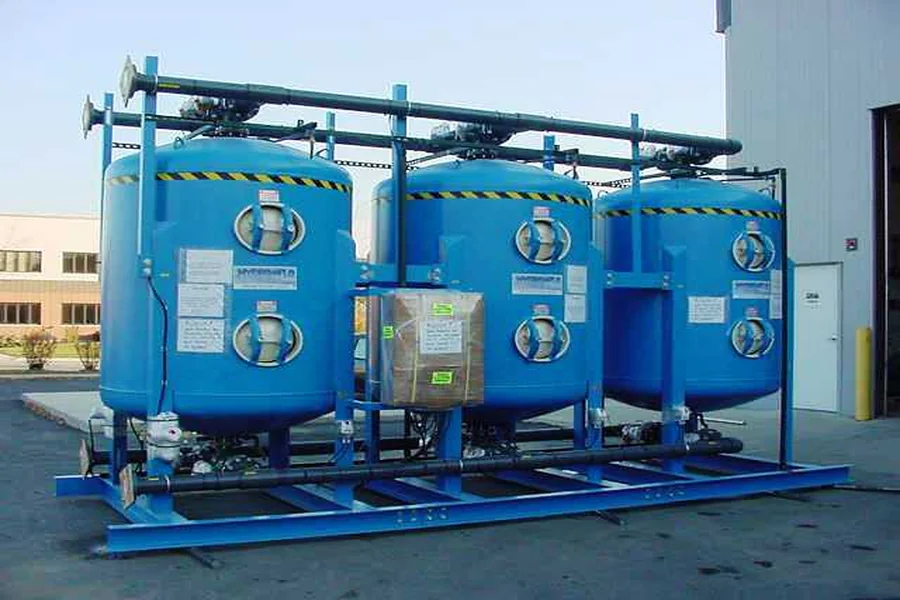
When a municipality, contractor, or industrial facility needs temporary filtration capacity, selecting equipment by name alone can create unnecessary risk. A high-rate sand filter rental request should begin with the actual operating conditions, including flow, solids loading, turbidity, discharge goals, available utilities, footprint, and schedule. Sandling Industrial Services helps project teams evaluate those factors and identify a practical temporary filtration or dewatering approach. Temporary equipment needs can arise during planned maintenance, construction, process interruptions, seasonal capacity demands, or an unexpected equipment outage. Depending on the application, the right solution may be a high-rate sand filter, a mobile plate-and-frame press, or a treatment configuration that uses more than one stage of solids separation.
Why High-Rate Sand Filter Rental Requests Need Technical Review
A filter may appear suitable because it can accommodate a target flow rate, but flow is only one part of the decision. Water with a high concentration of suspended solids can shorten filter runs, increase head loss, and create substantial backwash or residuals-management needs. Discharge requirements also matter, since a project may need turbidity reduction, solids capture, water reuse, sludge dewatering, or several outcomes at once.
Sandling Industrial Services can help turn a broad request into a more complete project definition by reviewing the following details:
- Average flow, peak flow, and expected flow variation
- Known turbidity, total suspended solids, and particle characteristics
- The type of water, sludge, or slurry being treated
- Required discharge, reuse, or downstream-treatment target
- Available electrical power, water supply, drainage, and piping connections
- Site footprint, delivery access, and operator access
- Rental start date, estimated duration, and shutdown schedule
- Backwash-water, filtrate, sludge, and filter-cake handling plans
- Applicable permit conditions, safety procedures, and discharge limits
What to Include in a Rental Request
Providing complete site information early can make an equipment review more productive. Before contacting Sandling Industrial Services, prepare a concise request that includes:
- Project location and a site contact.
- A description of the incoming water, slurry, or sludge.
- Average and maximum expected flow rates.
- Recent turbidity, solids, or laboratory data, if available.
- The desired treatment result and discharge destination.
- The required mobilization date and anticipated rental period.
- Utility availability, access restrictions, and space limitations.
- Any discharge, permitting, operational, or safety requirements.
Sandling Industrial Services can begin by identifying the application itself. Process water, municipal wastewater, construction dewatering, stormwater, dredged material, and industrial sludge can each have different solids characteristics and operating demands. The next step is defining the treatment objective. A project focused on reducing suspended particles in a liquid stream may require a different approach than a project focused on producing a manageable dewatered cake. The review should consider flow, pressure, solids concentration, turbidity, treatment target, and the way residuals will be managed on-site. Site logistics are also essential. Equipment transport, piping routes, power, drainage, staging area, and access for operators can determine whether a system is practical to deploy. Sandling Industrial Services can use this information to compare options and support a workable mobilization plan.
When a High-Rate Sand Filter May Be a Good Fit
High-rate sand filtration can be useful when a project needs temporary suspended-particle removal or turbidity reduction from a liquid stream. It is not a universal answer, and performance depends on influent quality, media selection, loading conditions, pretreatment, and maintenance practices. For example, high-rate sand filtration may be considered for temporary construction dewatering, process-water polishing, or supplemental treatment capacity during maintenance. In each case, Sandling Industrial Services should review influent turbidity, particle size, loading rate, backwash requirements, discharge limits, and the expected duration of operation. Research illustrates why those details matter. In a bench-scale stacked rapid sand filtration study, the measured turbidity removal results varied with influent conditions and operating time, demonstrating that filtration outcomes must be evaluated in the context of the specific application.
When a Plate and Frame Press May Be the Better Choice
When the central goal is mechanical sludge dewatering and solids capture, a plate-and-frame press may be more appropriate than a sand filter. Sandling Industrial Services offers plate-and-frame press rentals to municipal and industrial customers throughout the United States. In a plate-and-frame press, sludge or slurry is pumped into filtration chambers. The filter cloth retains solids, while the liquid passes through the cloth and leaves as filtrate. At the end of the cycle, the press opens, and the retained solids are removed as filter cake.
High-Rate Sand Filter Versus Plate and Frame Press
- Primary purpose: A sand filter is generally used for suspended-particle filtration and turbidity reduction. A plate-and-frame press is used for mechanical solids separation and sludge dewatering.
- Primary output: A sand filter produces filtered water and backwash residuals. A press produces filtrate and a dewatered filter cake.
- Key planning question: For a sand filter, ask how much water must be filtered and what quality is required. For a press, ask how much solids must be removed and how manageable the resulting cake must be.
- Important operating factors: Sand filtration requires attention to media condition, head loss, loading, and backwash. Filter press planning requires attention to sludge characteristics, cloth selection, cycle time, pressure, and cake handling.
Pretreatment and Residuals Planning Matter
Influent solids can affect how reliably a filtration system operates. According to research on stormwater filtration practices, clogging of filter media is recognized as the main limiting factor of these treatment systems. That finding reinforces the value of evaluating solids loading and pretreatment before selecting a temporary filter system. A rental plan should therefore address more than the treatment vessel. It should also identify whether settling, screening, chemical conditioning, or another pretreatment step is needed, along with a plan for backwash water, filtrate, sludge, or filter cake.
Support for Emergency and Planned Projects
Temporary filtration and dewatering equipment can support a variety of project conditions, including emergency equipment replacement, municipal plant maintenance, industrial process interruptions, construction dewatering, temporary solids management, and pilot work before permanent equipment selection. For instance, a wastewater facility facing a press repair may need temporary dewatering capacity while its permanent system is offline. Sandling Industrial Services can review sludge characteristics, required throughput, access conditions, and cake-handling needs to help determine whether a mobile plate-and-frame press rental is suitable.
Frequently Asked Questions
Can Sandling Industrial Services help with a high-rate sand filter rental request?
Yes. Sandling Industrial Services can review project conditions and help determine whether a high-rate sand filter, a plate-and-frame press, or another temporary dewatering approach is appropriate for the application.
Does Sandling Industrial Services provide rentals nationwide?
Sandling Industrial Services provides rental support for municipal and industrial clients throughout the United States. Equipment availability, transportation, and project scheduling should be confirmed for each request.
Is a high-rate sand filter always better than a filter press?
No. A sand filter may be appropriate for liquid-stream filtration, while a plate-and-frame press may be better suited to sludge dewatering and filter-cake production.
Prepare for a More Effective Rental Discussion
A successful temporary treatment project starts with clear operating data and realistic site planning. By collecting flow information, solids or turbidity data, treatment goals, utility details, site constraints, and a residuals-management plan, a facility can help Sandling Industrial Services evaluate the request efficiently and identify a suitable temporary filtration or dewatering solution.
Conclusion
Choosing temporary filtration equipment requires more than matching a project with a filter by name or flow rating. Flow, solids characteristics, turbidity, treatment objectives, site limitations, utilities, and residuals handling all influence whether a system can operate effectively. By preparing these details before requesting a rental, project teams can provide Sandling Industrial Services with the information needed to evaluate whether a high-rate sand filter, a plate-and-frame press, or another treatment configuration is appropriate. A thorough review can also help address pretreatment, discharge requirements, equipment access, and mobilization needs before the system arrives on site.